Seeing water drip or pool around your AC during winter can catch any Florida homeowner off guard. You expect this kind of problem in the summer heat when your system is working nonstop—but winter leaks feel confusing. If you’ve recently searched “why is my AC leaking water”, you’re not alone. Florida homes experience a unique mix of humidity, shifting temperatures, and constant AC use that makes winter water leaks surprisingly common.
This guide breaks down the most frequent causes, what you can safely check yourself, and when it’s time to call a professional before the issue turns into water damage or a system failure.
1. A Clogged or Backed-Up Drain Line
The most common answer to why is my air conditioner leaking water is a simple one: the drain line is clogged. Even in winter, Florida humidity can cause algae and debris buildup in the condensate line.
How a clog leads to leaks
- Water can’t exit through the drain line
- It backs up into the drain pan
- The pan overflows onto the floor or the surrounding area
What you can safely check
- Look for water around the indoor air handler
- Inspect the drain line for visible buildup
- Check if your float switch has triggered, and shut the system off
If you see standing water or your system has shut down completely, it’s time to schedule AC repair and maintenance.
2. Frozen Evaporator Coil (Yes, Even in Florida Winter)
Many homeowners assume coil freezing only happens in extreme cold climates. But in Florida, coil freezes happen due to airflow problems and refrigerant issues—not low outdoor temperatures.
Common causes:
- Dirty air filter
- Low refrigerant
- Blocked airflow
- Blower motor issues
As the ice melts, water drips into the pan and sometimes overflows, causing a leak.
What you can check
- Replace the air filter
- Make sure vents are open and not blocked
- Look for visible ice on the indoor unit
If the coil is frozen solid or keeps freezing repeatedly, it’s not something to ignore—it means there’s an underlying issue.
3. Damaged or Rusted Drain Pan
If you’re still wondering why is water leaking from my AC unit, a damaged drain pan may be the culprit. Over time, metal drain pans can rust or develop cracks, especially in older systems.
Signs include:
- Water puddling under the air handler
- Corrosion around the pan
- Drips coming from multiple points
A damaged pan needs replacement before the water spreads into drywall or flooring.
4. Excess Condensation From Florida’s Humidity
Even during winter, Florida humidity can cause extra moisture buildup. When the AC runs in short bursts—common in mild temperatures—it may not drain moisture fast enough.
This is a frequent cause of:
- Minor water leaks
- Moisture around ducts
- Dripping from the air handler door
If you’re searching why is my aircon leaking water, humidity cycling is often part of the answer.
5. Ductwork Leaks or Sweating
Another less obvious cause of AC leaking water in winter is ductwork sweating. When warm, humid indoor air meets cold duct surfaces, condensation forms and drips.
If you’ve noticed moisture around vents and wondered why is my AC duct leaking water, it often comes down to ductwork sweating caused by warm, humid air meeting cold surfaces.
You may notice:
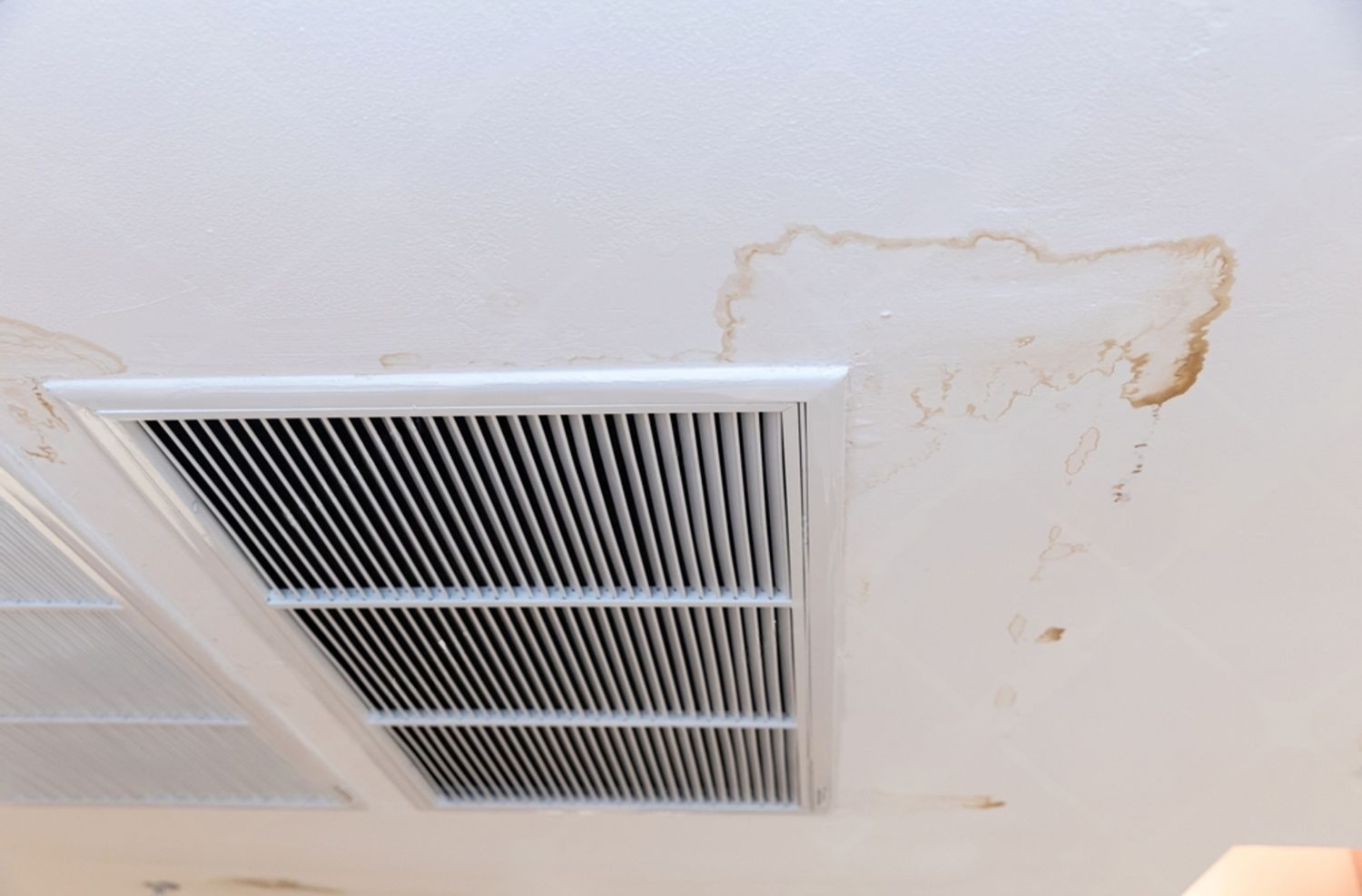
- Water stains on the ceiling near the ducts
- Dripping from the attic or garage duct runs
- Wet insulation around ductwork
This often requires sealing or insulating ducts properly. If moisture is coming from ducts rather than the air handler, a technician can identify the exact source.
6. Refrigerant Problems Causing Excess Moisture
Low refrigerant changes the pressure inside your system, which leads to coil freezing. When the ice melts, it creates more water than the drain system can handle.
Common signs of refrigerant issues:
- Weak airflow
- Bubbling or hissing noises
- Uneven temperatures in the home
- Ice buildup on refrigerant lines
Ignoring refrigerant problems can cause long-term damage to the compressor, so professional service is recommended quickly.
When It’s Time to Call a Professional
While some checks are safe for homeowners, water leaks can escalate fast—especially inside walls or attics. Call a professional if:
- Water is pooling more than once
- The system keeps shutting off
- Ice returns after melting
- You see water damage forming
- You hear unusual noises
- The leak worsens when the system runs
And if the problem is getting harder to manage on your own, we can step in to inspect the system, find the cause, and stop the leak before it spreads.
How to Schedule a Diagnostic Visit
A technician will check:
- Drain line flow
- Evaporator coil condition
- Refrigerant levels
- Drain pan integrity
- Blower performance
- Ductwork insulation
- Safety switches and sensors
If you’re ready to schedule a diagnostic appointment, you can book online here:
Final Takeaway
If you’re dealing with why is my AC leaking water, the cause could be as simple as a clogged drain line or as serious as a refrigerant issue. Winter leaks are common in Florida because humidity, airflow restrictions, and system wear don’t stop when temperatures drop. The sooner the problem is inspected, the easier it is to prevent water damage or system failure. And if your AC is leaking right now, eaching out to us at Streamline Air is the quickest way to get reliable help on the way.